Estonia taxation compared with Germany and Spain
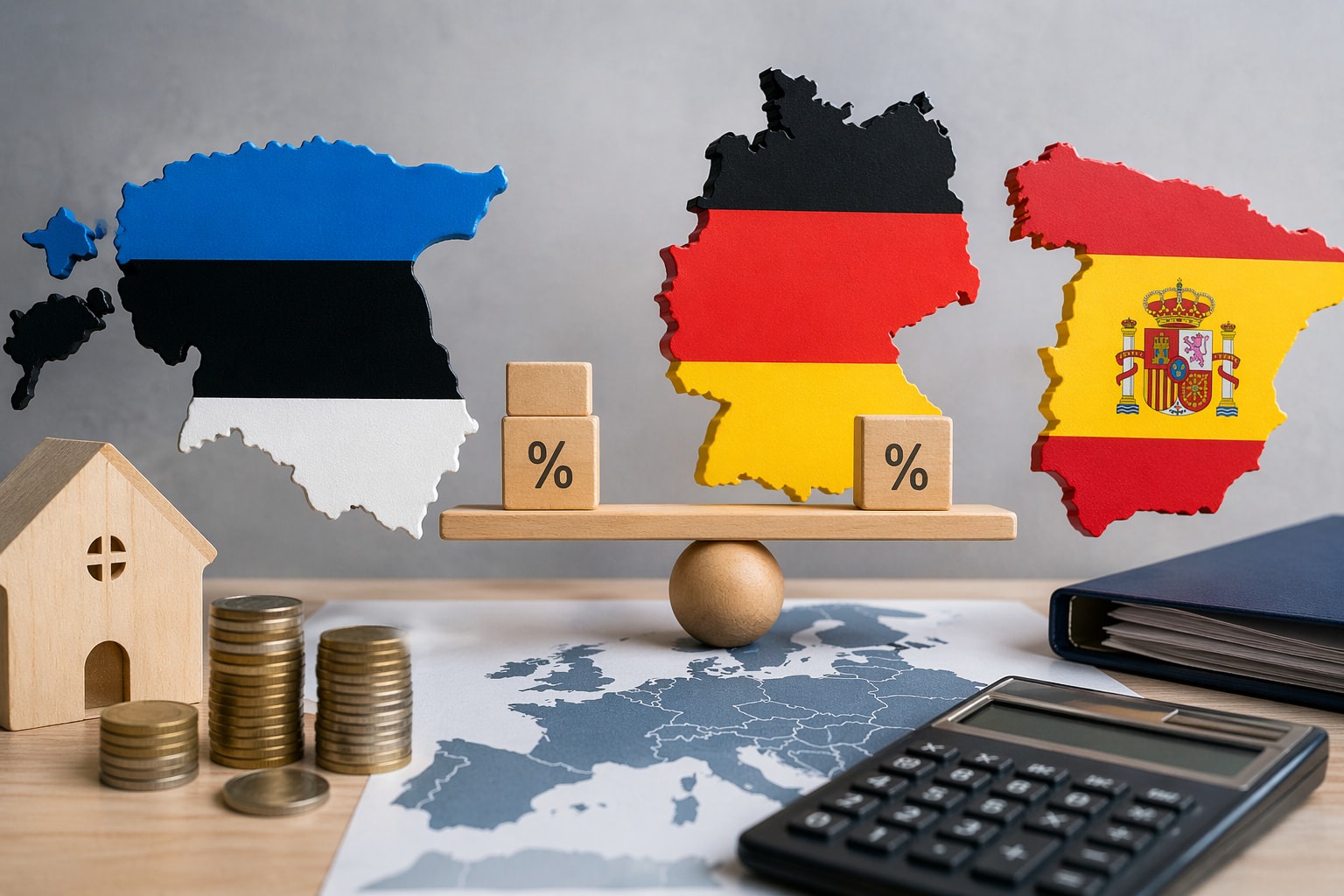
Estonia taxation is often described as simply “lower” than other European systems, but that is not the real distinction. The bigger difference is structural. Estonia usually taxes corporate profits when they are distributed, while Germany and Spain generally tax company profits each year as they are earned. For founders who want to reinvest cash instead of extracting it immediately. That timing difference can matter more than the headline rate itself.
That is why Estonia taxation attracts attention from international entrepreneurs. A company can normally keep profits inside the business for growth without immediate corporate income tax on undistributed earnings. In Germany and Spain, the company usually faces annual taxation on taxable profits regardless of whether cash is paid out to shareholders. At Silva Hunt, an Estonia-based accountancy and tax advisory firm, we see that this timing point. Is the first thing founders should understand before comparing jurisdictions.
How Estonia taxation differs from Germany and Spain
When people compare Estonia taxation with Germany and Spain, they often look for one simple percentage. That approach hides how each system actually works.
In Estonia, resident legal persons pay corporate income tax mainly on distributed profits and certain deemed profit distributions, not on retained profit left inside the company. The Estonian Tax and Customs Board states that the corporate income tax rate is 22/78 and that only the standard 22/78 rate applies to dividends. It also explains that an Estonian company formed by an e-resident is an Estonian resident company. But the timing of corporate taxation is deferred until profits are distributed.
Germany uses a layered annual-profit system. The Federal Ministry of Finance states that corporation tax is levied on the income of legal persons at 15%, and Germany also applies a solidarity surcharge to corporation tax. On top of that, trade tax is charged at municipal level. The trade tax base rate is 3.5%, and the municipal multiplier is at least 200%, with many municipalities using higher multipliers.
Spain also taxes corporate profits annually. Spain’s Tax Agency states that the general corporate tax rate is 25%. While certain newly created entities can qualify for a 15% rate, alongside other special regimes for specific company types.

Estonia taxation at company level: why reinvestment matters
The strongest advantage of Estonia taxation is not that every company pays less tax in every situation. The stronger point is that retained profits can usually stay inside the company without immediate corporate income tax.
That matters for businesses that want to build reserves, invest in software, enter new markets, or expand gradually without paying out dividends each year. In practical terms, Estonia can leave more cash inside the company during the growth phase. For many service, consulting, software, and internationally managed businesses, that can be commercially attractive because it improves working capital and delays the tax event until a distribution actually happens. That is an inference from Estonia’s profit-distribution model rather than a separate legal rule.
A simple comparison shows the logic:
- In Estonia, a company that earns profit does not trigger immediate corporate income tax on that undistributed amount.
- In Germany, annual taxable profit is generally subject to corporation tax, solidarity surcharge, and trade tax.
- In Spain, annual taxable profit is generally subject to corporate tax even if the owners do not distribute cash.
This does not mean Estonia is always the cheapest choice. If the owner plans to distribute most profit every year, the advantage becomes narrower. The total result then depends not only on company taxation but also on shareholder residence, treaty rules, personal taxation where the owner lives. Estonia’s Tax and Customs Board expressly notes that residents are taxed on worldwide income, while non-residents are generally taxed only on Estonian-source income.
A simple founder example
Imagine three companies each earn 100,000 euros of taxable profit before any shareholder payout.
If the Estonian company keeps that money inside the company for reinvestment. The key Estonia taxation feature is that corporate income tax is generally deferred until a profit distribution happens. If the German or Spanish company earns the same profit, annual corporate taxation usually applies even if the money stays in the business. That is why Estonia can be more attractive for founders who want to compound capital inside the company rather than extract it immediately.
Estonia taxation is not zero tax
A common mistake is assuming that Estonia taxation means “no tax until dividends” and therefore very little compliance. That is not correct.
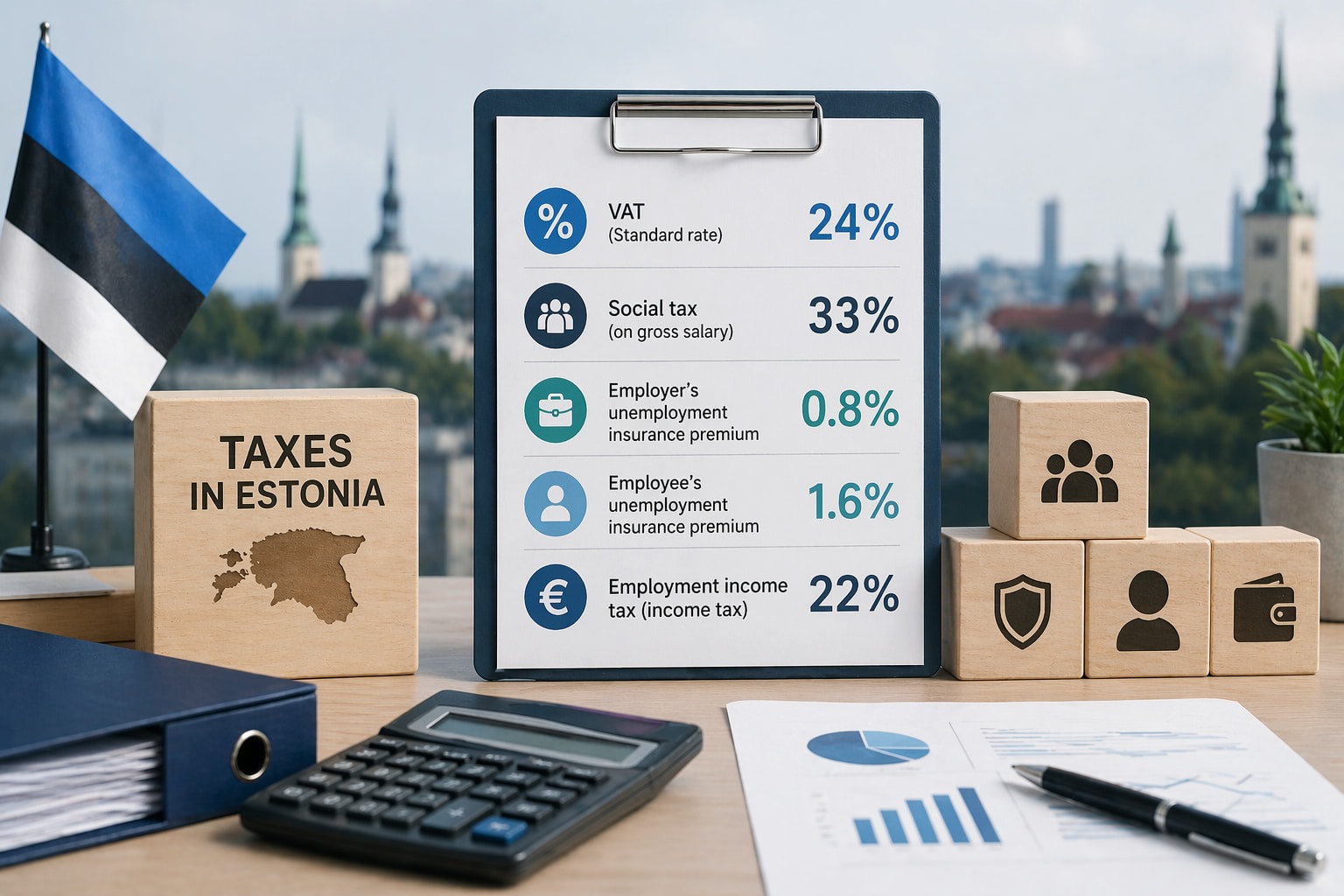
Estonia still has material indirect and labour taxes. The Estonian standard VAT rate is 24%. On payroll, social tax is 33%, the employer’s unemployment insurance premium is 0.8%. The employee’s unemployment insurance premium is 1.6% under ordinary Estonian rules. Employment income is generally taxed at 22% for income tax purposes.
So Estonia is not a no-tax jurisdiction. It is a jurisdiction with a very specific corporate tax timing model. A company with staff, VAT registration, cross-border services, and regular distributions still needs proper accounting and compliance.
Germany and Spain also operate VAT systems with standard rates of 19% and 21% respectively. That means Estonia is not automatically the lowest-tax country on every transaction type. The comparison changes depending on whether you are looking at retained profit, payroll, consumption taxes, or shareholder taxation.
Which founders usually benefit most from Estonia taxation?
Estonia taxation is often most useful for founders who match several of these points:
- they want to reinvest profits instead of paying out dividends every year
- they run digital, service-based, consulting, agency, software, or holding structures
- they want a clearer corporate tax logic around retained earnings
- they are ready to maintain proper governance, accounting, and compliance
- they understand that personal tax residency remains a separate question from company taxation
Germany may be more suitable where the business genuinely needs a deep German operational footprint, local staff, or facilities and can accept a more layered corporate tax burden. Spain can make more sense where commercial reality, customers, hiring, or regulation clearly point to Spain. So in some cases reduced or special corporate rates may be relevant. Estonia is often strongest where reinvestment flexibility and remote management matter more than immediate dividend extraction. That final sentence is a practical business inference based on the official tax mechanics above.
Final thoughts on Estonia taxation
Estonia taxation stands out because it changes the moment when corporate tax is paid. Germany and Spain generally tax company profits each year. Estonia generally taxes corporate profits when they are distributed. For many founders, that makes Estonia less about a dramatic headline saving and more about better cash-flow management and easier reinvestment.
That said, choosing Estonia only because of the phrase “low tax” is too simplistic. You still need to review VAT, salary taxes, dividend plans, the owner’s personal tax residency, and the real operational substance of the business. The best structure is the one that matches how the company will actually be run.
If you need help reviewing whether Estonia is genuinely more efficient than Germany or Spain for your business model, Silva Hunt’s tax advisers can help you assess the setup before you incorporate or restructure.