The Best Digital Banks for E-Residents Seeking an Estonian Bank Account
 -
-Updated for March 2026.
The Best Digital Banks for E-Residents are not always traditional banks. They are also not always Estonian. For many founders, the better question is not, “Which bank is in Estonia?” It is, “Which provider fits how my company will receive money, pay suppliers, manage subscriptions, and pass compliance checks?”. Estonian rules still allow share capital to be paid from a business account at a credit or payment institution anywhere in the EEA. Because of this, many e-resident companies do not need a classic Estonian bank account at all.
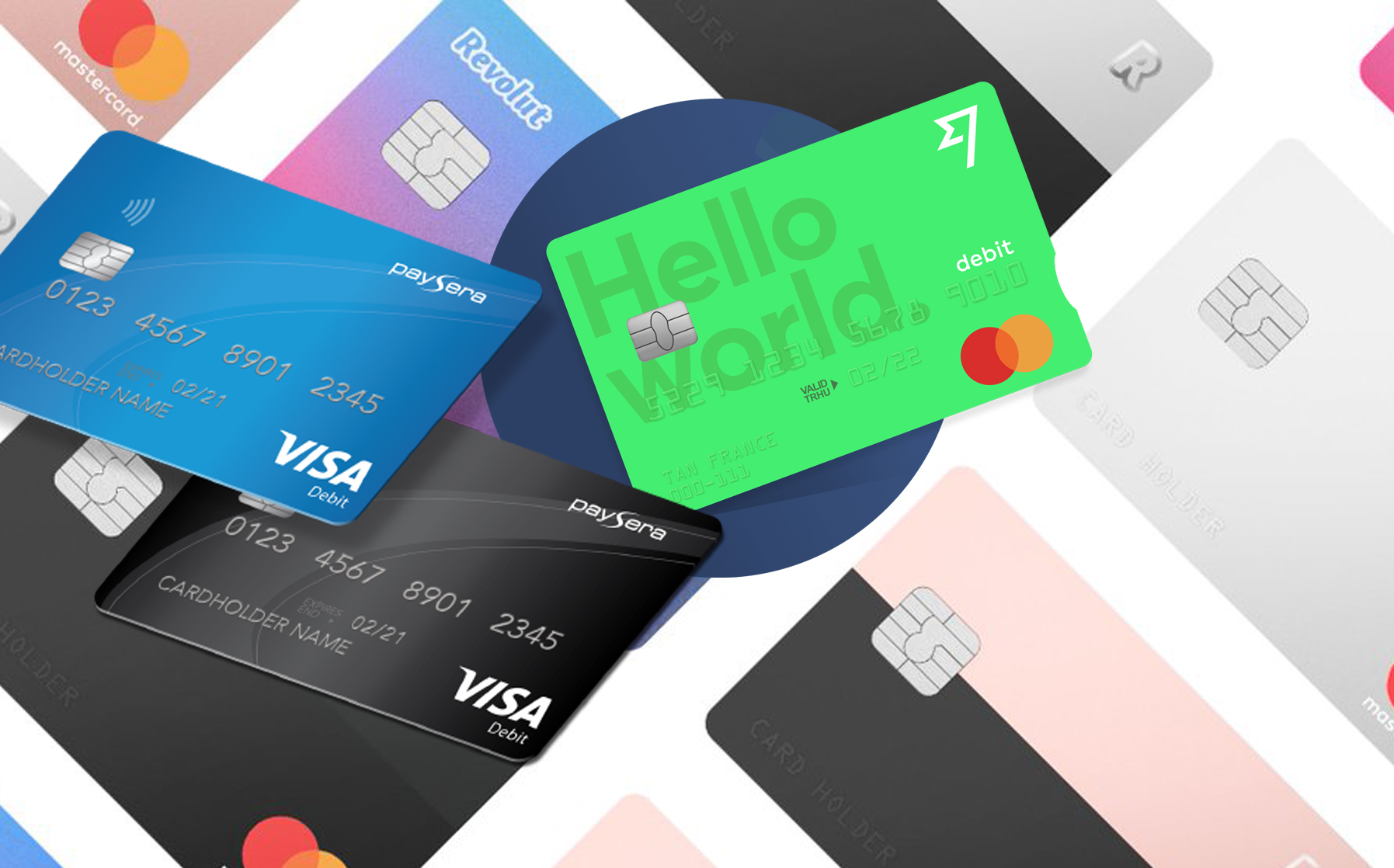
That is why the market has shifted. Today, The Best Digital Banks for E-Residents are usually a mix of banks, electronic money institutions, and payment platforms. The real difference is in onboarding, payment tools, integrations, and how comfortably the provider handles your business model. Wise, Revolut Business, Paysera, Payoneer, and Narvi all solve different problems, but they do not solve the same problem equally well.
Why The Best Digital Banks for E-Residents are not always Estonian banks
A lot of founders still begin with the wrong assumption. They think an Estonian company must have an Estonian bank account. In practice, that is often unnecessary. Estonia’s e-Residency guidance states that share capital can be registered with a credit or payment institution anywhere in the EEA. That having an Estonian bank account is not necessary for many e-residents.
What matters more is whether your provider can support your real business activity. A service company billing EU and US clients has different needs from an Amazon seller, a SaaS company with subscriptions, or a higher-risk international group with frequent cross-border transfers. Onboarding is also more compliance-heavy than before. Providers now routinely ask about your business activity, website, expected volumes, source of funds, beneficial owners, and operating address or physical presence.
So when we talk about The Best Digital Banks for E-Residents, the answer depends on whether you need an everyday operating account, marketplace collection tools, e-commerce checkout, advanced team controls, or a more bespoke compliance-driven setup. At Silva Hunt, book a call with our tax advisors and they help you choose the digital banking solution that best fits their business activity, operational needs, and compliance requirements.

The Best Digital Banks for E-Residents in March 2026: who stands out
Wise: still the strongest all-rounder for many remote-first companies
Wise remains one of the most practical options for e-residents who want a flexible business account for international operations. On the e-Residency Marketplace, Wise is listed as an authorised payment institution with online application. No extra in-person visit, and no substantial business connection to Estonia required. Wise says its business account lets companies send, receive, hold, and spend in 40+ currencies, and use the account for invoices, inventory, and payroll in 160+ countries.
For many service businesses, this makes Wise the cleanest default choice. The pricing is also easy to understand compared with many competitors. Wise currently shows a one-time 50 EUR registration fee for Business accounts, with sending and conversion fees starting from 0.47%, and no fee for holding money in the account. Wise also supports direct debits in selected currencies, multi-user access, accounting connections, and API-based automation.
The main limitation is structural rather than technical. Wise is a payment institution, not a bank, so customer money is safeguarded rather than protected under a classic bank deposit guarantee scheme. Wise is clear about that in its help material. For many e-residents this is perfectly acceptable, but it is still important to understand the difference.
Revolut Business: strong for teams, cards, and integrations
Revolut Business is attractive when your company needs more than simple inbound and outbound transfers. Its strongest side is the broader operating environment around the account: corporate cards, spend controls, team permissions, integrations, merchant tools, and API automation. Revolut’s Business pages highlight integrations with platforms such as Xero, QuickBooks, Shopify, WooCommerce, Slack, Zapier and many others. Alongside API tools for payments, card issuing, and payouts.
For e-residents, Revolut is often a good fit when the company already has real activity, multiple users, recurring vendor payments, or a need for stronger internal controls. In the EEA, Revolut states that it operates as a bank authorised by the Bank of Lithuania. Its current business plans in Estonia start from €10/month for Basic, with higher plans for companies that need more allowances and automation.
The trade-off is onboarding friction. Revolut says the company must be registered and able to prove physical presence in the UK or EEA. The application process can involve verification of corporate structure, business address, and nature of business. That means Revolut Business can be excellent once approved, but it is not always the easiest first account for a newly formed remote company with minimal substance.
Free consultation
Make your Estonian company easier to operate remotely
Silva Hunt supports digital signatures, e-services, accounting tools, banking introductions, contact person requirements, and the everyday workflows that make remote company management smoother.

Paysera: a very practical option for e-commerce and online payments
Paysera deserves more attention than it usually gets in articles about The Best Digital Banks for E-Residents. It is especially relevant for founders who care about e-commerce flows, online checkout, and cost-efficient euro operations. Paysera promotes online IBAN account opening, instant euro transfers 24/7, international transfers. Currency exchange into 30 currencies, contactless cards, and payment processing for e-shops. It is also listed in the e-Residency Marketplace as available online and not requiring a substantial business connection to Estonia.
Its cost structure is also straightforward for many European companies. Paysera’s current business fee page says account opening is free for companies registered in SEPA countries. While monthly administration for companies in most SEPA countries is 5 EUR per month, including 30 free transfers per month. That makes Paysera one of the more budget-friendly choices for founders whose activity is centred on euro payments and online sales.
The main point to remember is that Paysera is an electronic money institution, not a traditional bank. It is licensed by the Bank of Lithuania. Client funds are separated from company funds and held in reliable EU credit institutions. That structure is common in fintech, but founders should still understand it before choosing it as their main operating account.
Payoneer: best when collections matter more than full banking
Payoneer often suits a different type of e-resident company. It works especially well for companies that receive payments from marketplaces, overseas clients, or global trade channels. Payoneer says businesses can receive payments from more than 2,000 marketplaces and partner networks. They can also use local receiving accounts in USD, EUR, and GBP. Accept SWIFT wire payments, and pay contractors in more than 190 countries.
This makes Payoneer a strong option for sellers, agencies, freelancers, and cross-border operators who focus first on collecting funds from many sources. In practice, we see Payoneer perform better for collections and disbursements than as the only day-to-day finance stack for an Estonian company. We base this view on its product focus, marketplace links, and payment-routing structure, not on any lack of quality.
Payoneer also uses channel-based pricing instead of simple monthly account pricing. Its fee page shows that local receiving accounts may be free or may cost 1%, depending on the currency and location. Client card payments can cost up to 3.99%. The annual account fee of 29.95 USD applies only when you receive less than 6,000 USD, or the equivalent, over 12 consecutive months.
Narvi: one of the more interesting specialist options
Narvi is not as universally known as Wise or Revolut. But it is one of the more interesting options for companies that want a more bespoke cross-border setup. He presents itself as a Finnish EMI with dedicated FI IBANs, SEPA Instant, SWIFT support, multiple IBANs, team access, API access, and onboarding that is fully digital. It also says it can onboard almost all EU/EEA-incorporated companies and some companies outside the EU/EEA as well.
This makes Narvi relevant for founders who need more than a basic plug-and-play fintech account. It can be attractive for companies with more nuanced international payment needs, group structures, or cases where a more tailored compliance conversation is helpful. Narvi also openly explains that pricing depends on factors such as industry, risk, and country of incorporation. That onboarding decisions typically take up to two weeks depending on complexity.
Narvi is also clear that it is an EMI, not a conventional bank. It says customer funds are protected through safeguarding and segregation rules, with funds held in the EU at reputable banks. That transparency is useful, especially for e-residents comparing fintech convenience against more traditional bank expectations.

How to choose between the best digital banks for e-residents
The easiest way to choose is to start with your payment reality, not with the brand name.
Choose Wise if you want the most balanced remote-first operating account for invoices, contractor payments, multi-currency use, and relatively transparent pricing.
Choose Revolut Business if you need cards, team permissions, integrations, and a more developed operations layer around the account.
Choose Paysera if your company is strongly tied to euro flows, online checkout, or e-commerce payments.
Choose Payoneer if your main problem is collecting money from marketplaces or overseas clients, not building a classic finance stack.
Look at Narvi if your company needs a more tailored compliance-driven setup or broader cross-border structuring from the start.
Common mistakes e-residents make with digital banking
The biggest mistake is choosing a provider before understanding what the provider will ask during onboarding. Wise asks for business details, trading address, source of funds, beneficial owners, and expected use of the account. Revolut may require proof of physical presence in the UK or EEA and detailed business verification. Narvi also stresses AML and compliance requirements as part of onboarding.
The second mistake is treating all fintech accounts as interchangeable. They are not.Some providers handle daily operations better. Others work better for e-commerce, collections, or more complex international structures. At Silva Hunt we usually see better results when founders choose the account after they map their customer locations and currencies.
Why Silva Hunt helps
Choosing from The Best Digital Banks for E-Residents is often less about marketing and more about preparation. The right answer depends on your company’s activity, tax footprint, compliance documents, and the level of substance behind the business. A provider can be excellent in general and still be the wrong fit for your case.
At Silva Hunt, an Estonia-based accountancy and tax advisory firm, we help clients look at the full picture from the start. That includes company setup, compliance, accounting, practical onboarding expectations, and the background story a provider will want to understand. This makes the process faster, clearer, and usually much less frustrating than trying to solve banking questions in isolation.