Estonia e-residency bank account: which option fits your business?

Estonian e-Residency allows entrepreneurs from anywhere in the world to run an EU company remotely. One of the first practical decisions founders face is how to handle business banking.
Unlike many jurisdictions, Estonian companies are not required to have an Estonian bank account, but any EU/EEA bank account. Although fintech options are usually sufficient for normal operations, including paying share capital and handling company payment, e-residents may have to set up a business account with any EU/EEA bank, based on their business activity.
Which type of banking partner fits your business model best?
This practical guide compares the common options for e-resident entrepreneurs and explains how to approach choosing an Estonia e-residency bank account that fits your company structure.
Understanding the Estonia e-residency bank account reality
Opening a traditional Estonia e-residency bank account as a non-resident can be difficult. Estonian banks usually expect some form of connection to Estonia, such as:
- Estonian employees or contractors
- Local partners or suppliers
- Business activity in Estonia or the EU
- A founder who travels to Estonia periodically
E-Residency alone does not guarantee access to an Estonian bank account. Because of this, many e-residents rely on EU fintech institutions instead.
This approach is not a workaround — it reflects the modern financial infrastructure within the European Union. As long as your company holds a compliant EU/EEA business account, it can legally operate, receive payments, and conduct international transactions.
Understanding this reality early helps founders avoid unrealistic expectations when planning their Estonia e-residency bank account setup.

Why banking matters for e-resident companies
Choosing the right Estonia e-residency bank account structure is more than an administrative step. Banking decisions affect several aspects of your company’s operations, including:
- Paying suppliers and receiving payments from international clients
- Paying share capital when establishing the company
- Handling payroll if employees are hired
- Managing currency conversions and cross-border transfers
- Building credibility with financial institutions and partners
Different business models require different financial infrastructure. A SaaS company serving global clients, for example, may prioritise multi-currency payments and integrations with online platforms. A company operating in the EU with employees may prefer a traditional bank relationship.
Because of these differences, there is no universal solution for the perfect Estonia e-residency bank account.
The two main Estonia e-residency bank account approaches
There are two main categories of banking available to e-residents.
Traditional banks
Traditional Estonian banks include:
- LHV
- Swedbank
- SEB
- Coop Pank
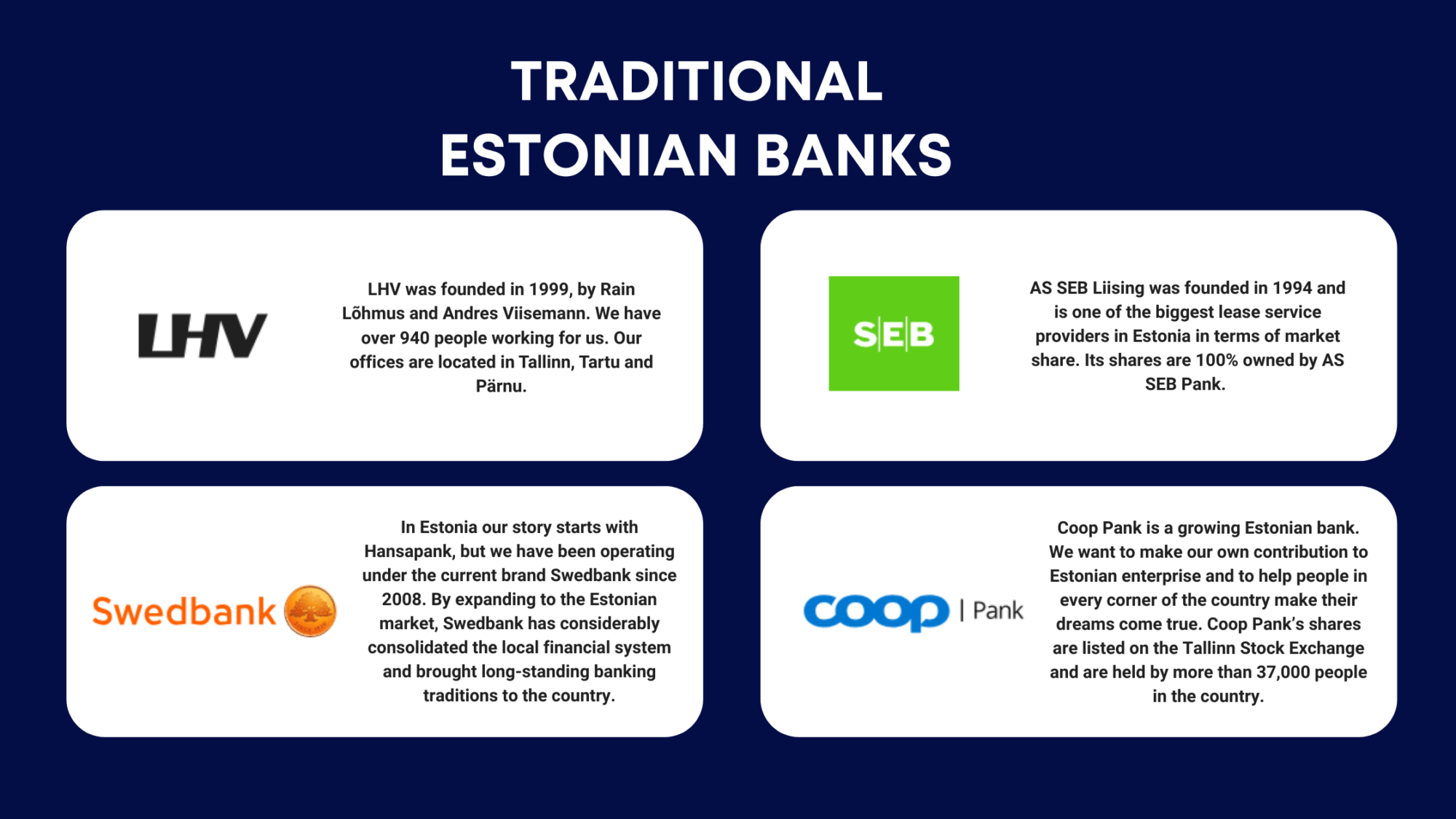
These institutions provide full-service banking and are physically located in Estonia.
A traditional Estonia e-residency bank account in one of these banks can offer strong institutional credibility and access to broader financial services.
However, these banks operate under strict compliance rules and perform detailed due diligence before onboarding international clients.
Fintech / digital banking platforms
Many e-residents instead use fintech institutions such as:
- Wise Business
- Revolut Business
These platforms operate digitally and are usually easier for international founders to access.
A fintech-based Estonia e-residency bank account setup can often be opened remotely and provides strong support for international business operations.
For many remote entrepreneurs, fintech institutions are the first step in building their financial infrastructure.
Traditional banks advantages for an Estonia e-residency bank account
Traditional banks can offer several important advantages when a company has stronger operational ties to Estonia.
Key advantages include:
- stronger credibility with local institutions
- easier handling of payroll and local transactions
- potential access to loans or financing
- stronger relationship banking
Traditional banks become more attractive when a company has real economic presence in Estonia, plans to hire employees locally, needs financing or credit facilities, and wants long-term institutional credibility.
Traditional banks also tend to be more comfortable with larger or more complex companies.
For businesses planning long-term EU expansion, a traditional Estonia e-residency bank account may eventually become an important part of the company’s financial structure.
Downsides of traditional banking
Despite their benefits, traditional banks may not always be the most accessible option for new e-resident companies.
Common challenges include:
- slower onboarding process
- more documentation required
- sometimes requires visiting Estonia in person
These requirements are linked to regulatory compliance and anti-money-laundering rules applied throughout the European banking system.
Fintech advantages for an Estonia e-residency bank account
Fintech solutions have become extremely popular among e-resident entrepreneurs because they simplify the early stages of company operations.
Advantages include:
- faster account opening
- easier onboarding for non-resident founders
- excellent multi-currency capabilities
- strong online tools and integrations
- better support for cross-border payments
For companies operating globally, fintech platforms often provide the flexibility required for daily business operations.
Many online businesses, digital agencies, SaaS companies, and international consulting firms operate successfully using a fintech-based Estonia e-residency bank account.
Downsides of fintech platforms
Fintech institutions are highly efficient for international payments, but they also have some limitations.
These may include:
- limited lending and financing services
- fewer traditional banking features
- may not be ideal for complex regulated industries
Because of these limitations, some companies later transition from fintech platforms to traditional banks once their business grows or develops stronger connections to Estonia.

A hybrid Estonia e-residency bank account strategy
One of the viable setups for e-residents is a Wise or Revolut business account for everyday international payments and operations, and an Estonian bank account later, once the company develops stronger connections to Estonia.
This combination provides both operational flexibility and institutional stability.
Many founders start with a fintech Estonia e-residency bank account during the early stages of their company and then open a traditional bank account once the company has:
- stable revenue streams
- employees or partners in Estonia
- operational substance within the EU
This gradual approach often aligns better with how international businesses naturally grow.
Compliance considerations for an Estonia e-residency bank account
Banks and fintech institutions both operate under strict regulatory frameworks. This means companies must demonstrate legitimate business activity and transparent financial operations.
Typical compliance checks include:
- verification of business activity
- identification of company shareholders and directors
- explanation of transaction flows
- proof of clients or partners
These checks are part of standard EU financial regulation and are not specific to Estonia.
Proper preparation and documentation significantly improve the chances of successfully opening and maintaining an Estonia e-residency bank account.
Choosing the best Estonia e-residency bank account for your business
Choosing the best banking option is ultimately dependent on your activities, clients, and future plans.
Some businesses require strong local banking relationships, while others primarily operate internationally and benefit more from digital financial platforms.
At Silva Hunt, an Estonia-based accountancy and tax advisory firm, entrepreneurs can receive tailored guidance on structuring the right Estonia e-residency bank account solution. Our experienced accounting and legal professionals help founders understand banking expectations, prepare the correct documentation, and build a company structure that financial institutions are comfortable working with.
We support entrepreneurs from the initial company setup stage all the way to building long-term operational stability in Estonia. Our team stays involved throughout the process, providing clear answers and practical guidance so clients can focus on developing their business.
You can also explore our services and pricing directly
Understanding the available banking options early makes it much easier to build a stable and scalable international company structure under Estonia’s digital business framework.
The approach described in this article follows the recommended SEO structure used in Silva Hunt’s internal content guidelines.